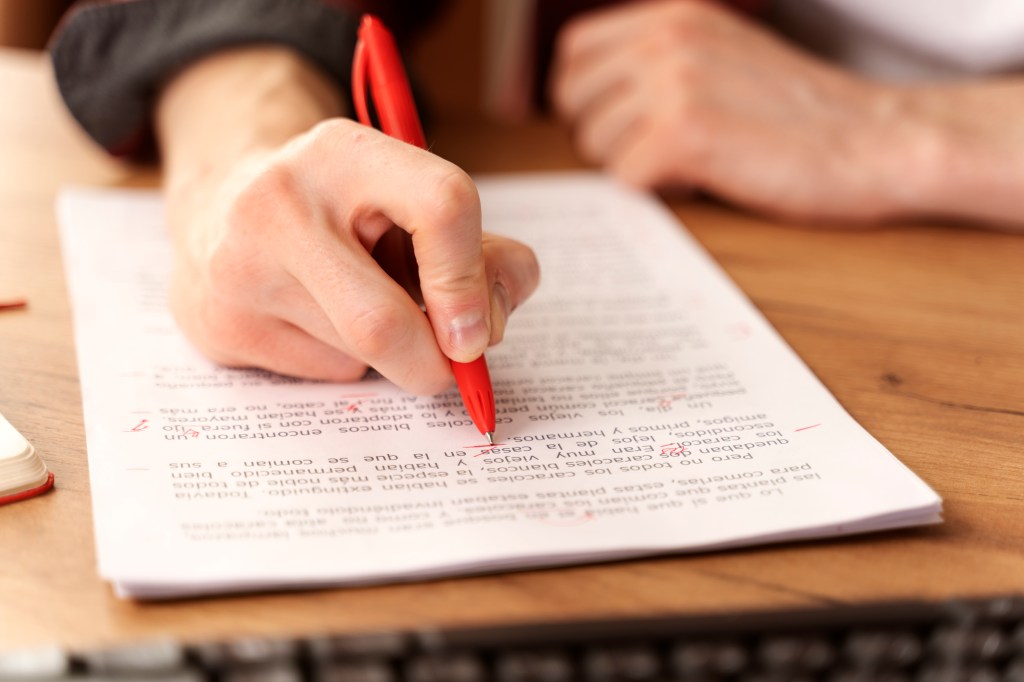
Proofreading is a final check to make sure the document is as good as possible. Minor errors are easy to miss in your own work, but can be hugely off-putting to readers and may prevent people from engaging with writing that you have worked hard on.
At Better World Words, I aim to ensure that your writing is as good as it can be before you put it out there. What you have to say is important, and it deserves to be taken seriously.
You know what it’s like. Your English is great! You’ve been surrounded by English for most of your life: it’s in the TV shows you watch, the music you listen to, half of your textbooks at university… You’ve been swearing in English pretty much since you understood what a curse word was.
But then you sit down to write in English, and after a few sentences, you start to wonder. Is that word exactly the right one to use? What about the word order? Should it be “is” or “are” here, and ugh, how do you spell “liaise”? Did you mean to write “tough”, “through”, “thorough”, “thought”, “though” or “throughout”?
Designed by Freepik
I’ve been where you are. One of my earliest jobs was translating text for a game into Swedish. At the time, I was speaking Swedish full-time at work, hanging out with Swedish people in the evenings, and only recently back from living in Sweden. I was absolutely confident I could manage the translation… until I got down to it, when my experience went pretty much as I’ve outlined above (minus the weirdness that is “through/thorough/though/thought/throughout”).
Thankfully, I could take my draft to one of my lovely colleagues, whose mother tongue was Swedish, and she sent me back a corrected version.
I learned my lesson: never again would I agree to translate anything into a language that wasn’t my mother tongue, no matter how confident I felt! I translate from Swedish (and Danish and Norwegian) into English, and I proofread and edit English text, and that works great for everyone.

English is everywhere; according to Statistica, English was the most commonly spoken language in the world in 2023, spoken by a little under 1.5 billion people. This is greater by some margin than speakers of Mandarin Chinese, Hindi and Spanish. However, according to language learning platform Babbel, only 380 million of those 1.5 billion people are native English speakers. The rest have learned English because they need it, or because they consume English-language culture, such as movies or books. Maybe even because they just like learning languages (*sticks hand up*). If you’re reading this, you may well be one of those many non-native speakers of English.
Scandinavians often find themselves needing to write in English, whether for academic purposes or simply to communicate with the rest of the world. Often they do a good job – Scandinavians speak GREAT English on the whole! But they rarely do it perfectly, because formal writing is very different to the kind of spoken English you encounter on a daily basis. Subject-verb mismatches, misspellings, or (most frustrating of the lot) errors introduced by Microsoft Word’s “helpful” spelling and grammar checker are some of the most common issues that turn up in text written by non-native English speakers.
I notice this a LOT with websites. A company may have paid someone to translate their web copy, and this person may even have done a good job… but then the web designer realised later that they’d forgotten to include the menu options in the translation. Someone takes a quick stab at a translation, and inevitably it is either inconsistent with the translated copy, or just plain wrong.
I know this happens, because I see it everywhere.
My experience with Scandinavian languages means I have a great ear for the quirks Swedish, Danish and Norwegian people often introduce into their writing.
“The client is very happy and just wrote today: Excellent work. Please pass my appreciation on to the proofreader.” – Message from a major Danish pharmaceutical company regarding the proofreading of their annual report
Photo by Adrien Olichon
What does a proofreader do?
As a proofreader (sometimes spelled proof-reader or occasionally proof reader), I check your English text for typos, grammatical errors, formatting issues and consistency, as well as anything you particularly want me to look out for. This can be particularly useful when a document has been authored by several different people, all of whom may make slightly different choices when it comes to grammar and style – but errors can be introduced at any stage of working on a document, and are often surprisingly hard to spot.
Here’s what you get:
- Thorough proofreading to iron out any Swenglish, Danglish or Norglish, including word order issues, grammar and spelling
- Checks for consistency
- Comments on anything that may require further discussion
- A version of your document with changes highlighted using Track Changes, so you can see any changes that have been made
- A version of your document with changes accepted
- I can also provide a brief summary of the kinds of issues I noticed in particular
Who do I proofread for?
My clients come from all walks of life, and include:
- Organisations working on green transitions
- Students and academics
- People who speak English as a second language (ESL)
- Scandinavian speakers writing in English
- Publishers
- Authors
- Multinational businesses
- Training organisations
- Charities
What kind of things do I proofread?
One of the joys of editing and proofreading is that I’m always learning something new and reading on a huge variety of topics! In recent years, my proofreading has included the following:
- Impact reports
- Research reports
- Student dissertations
- PhD theses and chapters on topics such as rewilding, social policy and the European Court of Human Rights
- Training courses
- Fiction: novellas and novels, particularly those focused on environmental and thrutopian topics
- Non-fiction journal articles and books
- Business literature
- Marketing collateral
- Annual reports
Please note that I provide proofreading for both UK English and US English. If you’re unsure about whether I can help, just ask me! If I don’t feel able to take on your document myself, I may be able to point you toward another professional colleague.

Evert Taube looking out on his beloved sea
How I work
I always use a checklist for proofreading; this is based on professional experience of the kinds of issues that tend to come up. I will add to the checklist anything you particularly want me to check for.
During proofreading, I mark issues using Track Changes in Word, and occasionally add comments for clarification. I can also use PDF editing and commenting tools in Adobe Acrobat if you prefer.
As a member of the Chartered Institute of Editing and Proofreading (CIEP) (formerly the Society for Editors and Proofreaders, or SfEP), I work to a highly professional standard and comply with CIEP’s Code of Conduct and Professional Practice Code, which you can find here. This includes maintaining confidentiality and working to industry-recognised standards.
Once I’ve finished proofreading, I will send you two versions of the document, one with changes tracked and one with changes accepted (the “clean” file). You are always very welcome to ask questions about the changes I’ve suggested and, within reason, I’m happy to take another look at certain sections.
Quick turnaround
Your deadlines are important to me, and I pride myself on working accurately in a way that fits with your timing needs. If you need your document back quickly, I offer an express service that includes a 24-hour turnaround for shorter documents (under 3,000 words). When contacting me, please mention that you are interested in the express service.

Photo by Scott Graham on Unsplash
Free sample edit
For longer documents, I offer a free sample edit of one to two pages. This allows you to see how I work and determine whether I would be a good fit for your book, chapter, thesis or document. (It also allows me to judge the level of editing required and give you an accurate quote for the work.)
To take up this offer, please email a Word file to me at liz@betterworldwords.com, or message me via the contact form if you prefer. I will provide a sample proofread or edit using Track Changes. In my response, I’ll also give you an idea of the level of editing required, my estimated turnaround time and a no obligation quotation.
Can Work With You Anywhere
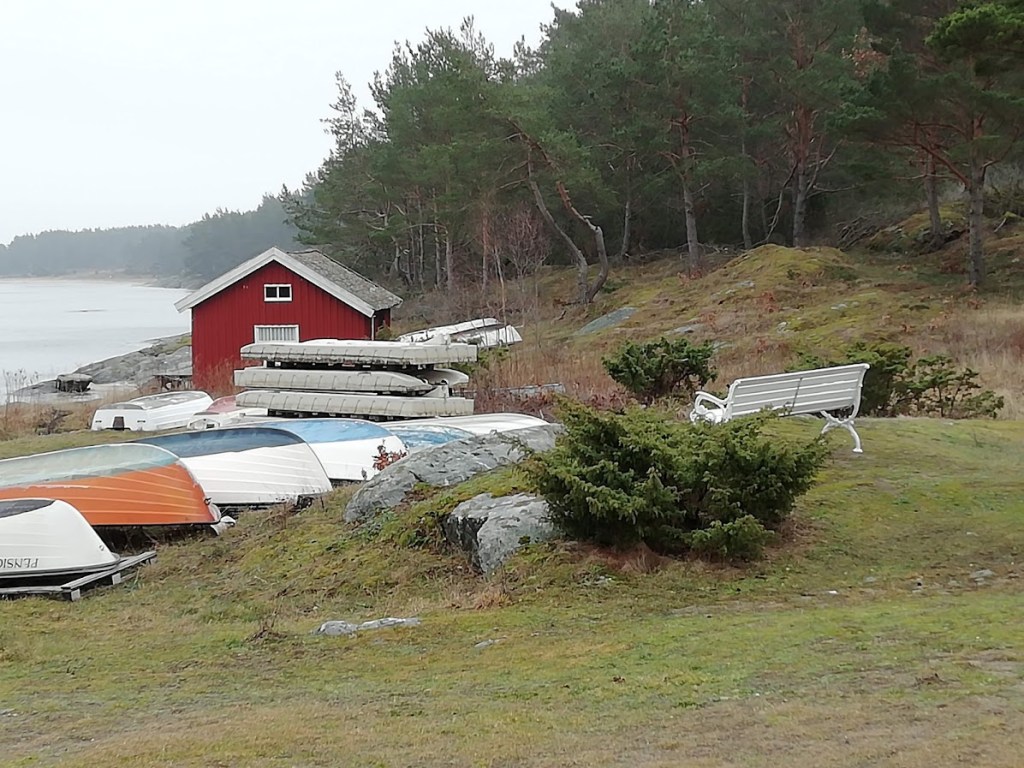
It doesn’t matter whether you’re in Lund, Uppsala, Malmö, Göteborg, Stockholm, Copenhagen, Roskilde, Aarhus, Aalborg, Åbo, Southern Denmark, Oslo, Bergen, Stavanger, Tromsø or Trondheim, in a tiny stuga on Gotland, or anywhere else in Sweden, Denmark, Norway or Finland – wherever you are, you can send me your document, manuscript or PhD thesis in Word format, and I will email you a proofread version.
If you’re ready for your work to be proofread (or just want to learn more), go here to contact me and request a quote. I will get back to you within 24 hours. It’s helpful if you can give me an estimate of the number of words involved and when you would need the proofread files back.
Simply message me via the contact form (or email me at liz@betterworldwords.com) and we can get started.
“I really appreciate your work on this project and your attention to detail. I didn’t have any further questions for you, only to say thank you for spending the time on this for me and making it easy to understand the edits you had made in it.” Lucy from Candlelighters, a charity that supports families affected by childhood cancer, on my work proofreading a research report and brochure.


 Better World Words