AI translation or human translation: getting into the weeds

I had an enquiry recently about a book that was written in a foreign language. The writer had found me on BlueSky and was considering two approaches to getting the book out there. The first was to find a professional translator to work on it. The second was to use machine translation post editing (MTPE) and then have a professional copyeditor work on it.

As a professional translator who recently lost a lot of work to MTPE, I have feelings about this! But I also have eight-plus years of experience of working with MTPE, i.e. editing text that has been machine-translated, alongside traditional copyediting, proofreading and translation work. I feel pretty confident in knowing what it can and can’t do well.

This book also sounded wonderful – if the writer’s language was a language I offer for translation, I’d have jumped at the opportunity to translate it. And I also knew I’d probably love copyediting it. Sometimes you just know a book is a great fit.

With all of that in mind, here’s the gist of my reply to the author, edited to preserve their anonymity.
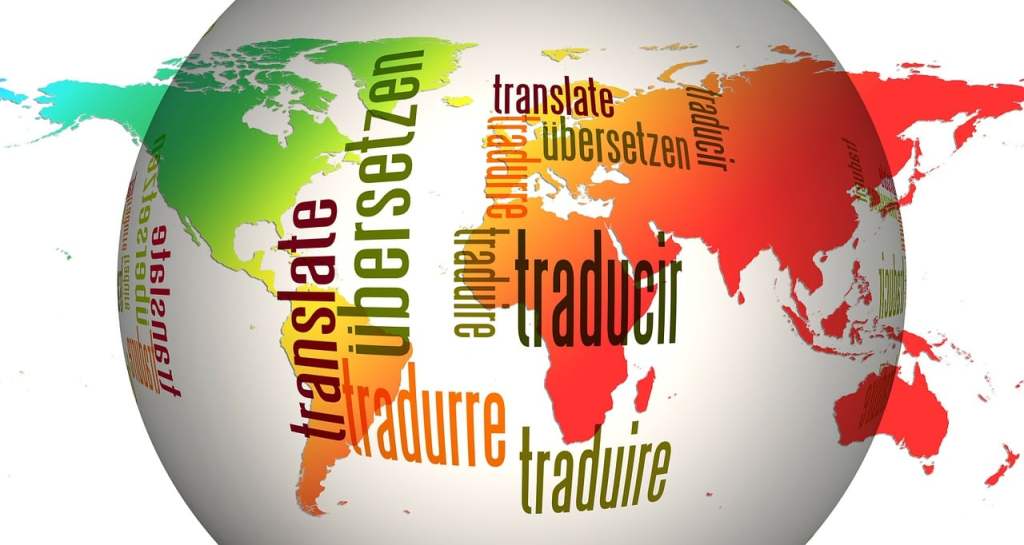
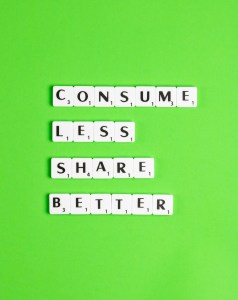
Image by Gerd Altmann from Pixabay

In terms of the translation approach, I would be very careful if you go with MTPE. It’s obviously more economical, but in my experience machine translation can introduce errors and inconsistencies (for example, at one point referring to a town as a town, and then the next time as a village or a conglomeration), and these are sometimes easy to miss, because the text looks decent at first glance. In my professional opinion, machine translation works less well for literary writing (even if it’s non-fiction), because the writing is more lyrical and metaphorical (so words don’t always mean exactly what a machine might think they mean).

Another danger with machine translation is that the text may read as “good enough”, but it might not reflect your true voice. So it might require substantial rewriting to make it sound like you.

That said, it’s possible your English will be good enough to check this yourself and pick up on a lot of things – and certainly, since I have experience with MTPE and translations in general, I would be able to keep an eye out for issues like this during copyediting.

If you were to use a professional translator, this would probably be more expensive and it would be harder to find someone who is the right fit – but the final quality in English would probably be better, if you find the right person for the work. (It’s also worth mentioning that you would want to clarify with the translator how/whether they use translation tools, for the reasons I’ve outlined above. Most translators will be transparent about this.)

Further on in the process, if you find a publisher they will have their own copyeditors and proofreaders. If you use a professional translator and then self-publish, I’d suggest at the very least using a proofreader once you have the finished manuscript back from the translator. Depending on the translator, I’d suggest using a copyeditor as well.

As a guide, I would charge more for copyediting if machine translation were involved.

Image by Pexels from Pixabay

As I mentioned at the top of this post, there are a lot of emotive issues surrounding the actual question of what to do here. I am coming to this from the perspective of someone who was more or less forced to use MTPE as a translator working with large agencies (i.e. it was a choice between adopting it or losing them as clients, and at that time they represented the vast majority of my income). So I’m experienced at working with MTPE text, but that doesn’t mean I’m always happy to use it. A human-translated text is almost always better, in my experience. It’s also a lot more expensive.

I know many editors will refuse to work on a text that has been created by AI – but what about when it has been created by a human but translated by AI? And what about the nuance from the author’s perspective: if you’ve written a book in a language that not many people speak, and you want to bring it to a wider audience, how do you find the right people to work on it? This book has come from your heart. Ideally you’d find a translator who can take it to their heart, too. But if you can’t, perhaps a combination of your own skills, MTPE and a skilled copyeditor who loves your book is the best option?

I suspect this kind of enquiry is going to become more common in future. I’d love to hear from other editors and translators: how do you respond or how would you respond in this situation? And are there any writers out there who have used one or other of these approaches?
Copyediting non-fiction: Grassroots Economics

Did you know that money hasn’t always been the way people exchanged resources? In many communities all over the world, people supported each other by creating grassroots economies that functioned similarly to the way mycorrhizal fungi support plants: by facilitating exchange and regulating/prioritising resources based on individual needs. These grassroots economies have often been subsumed by colonialism and money, but now they are making a comeback.

I’ve been following the work of Will Ruddick and Grassroots Economics for a while now, so I was delighted when Will contacted me and asked me to copyedit the book he was writing.

When he sent me a draft, I was even happier, because I could see it was packed full of wisdom and the kind of empowering information I wish everyone knew. I was so excited at the idea of diving in and making the prose really sing, while ensuring that Will’s calm, warm voice shone through.

Will was on a deadline, and he was also keen to invite other experts to give input on the draft. The feedback kept coming in, and we kept rejigging things, while I kept a weather eye out for any issues that might be introduced in the updated text.

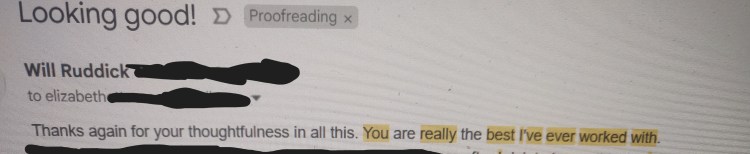
It was an intense few weeks, with a lot of messages flying back and forth. I really enjoyed it, even more so because Will it clear he appreciated my work.

Screenshot of a redacted email exchange. The text reads, "Thanks again for your thoughtfulness in all this. You are really the best I've ever worked with.

(Quoted with permission.)

And then it was a book! A really beautiful one, too. Just look! 👇🏾

Cover of the book, Grassroots Economics: Reflections and Practice, by William O. Ruddick

Credit for this beautiful cover and design goes to Octopi

Grassroots Economics: Reflection and Practice brings together Will Ruddick’s vast experience of working with communities that are practising ways to build resilience and trust in economies that don’t rely on outdated, centralised currency systems. He walks us through the solutions and ideas with case studies to ensure that the theory doesn’t get too dry – and the real-life examples are fascinating to read in themselves. It’s an inspiring read – and, as you can see, a really beautifully illustrated. In line with the principles outlined inside, it’s available at cost, or you can download the PDF version free. Go here to learn more or download a copy.

Thanks for letting me be a part of this, Will! 💚

LinkedIn exchange between Elizabeth Ottosson and Will Ruddick, in which Will says, "Thanks so much! You are the best copy-editor in the world. I don't know what I would have done without you.

(Quoted with permission.)

“The best copy-editor in the world”? That’s officially the best feedback I’ve ever received, anyway! 💚

I’m now taking bookings for large (book-length) projects for late April, May and June. (If you have a shorter project, don’t worry – I always make sure I keep some time free to fit those in around the bigger projects.) If you’re interested in working with me, email liz@betterworldwords.com to explore whether we’d be a good fit!

And in case you’re here for the grassroots economics and other ideas for saving the world, here’s another link to that beautiful book: Grassroots Economics: Reflections and Practice.

What I’ve been up to in January 2025


I have been incredibly busy this month, which is why I’ve been quiet online.

(Today and yesterday, because I challenged myself to write this post and then felt the usual resistance to doing anything remotely ‘salesy’, I have been all over social media, so hi again/sorry if you’ve just been chatting with me on Bluesky or LinkedIn.)

This is a linked version of the post I put on LinkedIn yesterday.

A bit about some the projects I’ve been working on:

💚 A fantastic non-fiction book all about how we can revive and reclaim our ancestors’ systems of cooperation and collaboration to live well instead of relying on money, including compelling examples and case studies of modern, real-world usage. It’s out very soon, and I will be shouting about it!

💚 Editing website copy for one of my favourite clients, Mustardseed Trust, who really walk the walk as well as talking the talk when it comes to enabling organisations that are working on tangible ways to nurture the web of life.

💚 Translating information for a trade union booklet. I am so interested in the contrasting attitudes (obviously this is a huge generalisation!) to trade unions in Scandinavia and the UK, and I’m reminded of this every time I work for this client.

💚 I have two longer-term editing projects on the go. One is a copyedit of a hugely enjoyable SF novel, which should be finished in a week or so. The other is a developmental edit for a memoir on a really important topic, which I and the author are taking slowly so that we can make it as good as it deserves to be.

This is a relatively small slice of what’s kept me busy at work this month, but I think it paints a pretty accurate picture of the sorts of things I like working on.

If you’d like to book me in for some work in February or March, feel free to message me here or check out my LinkedIn profile for more about me and my work.

What’s next:

💚 Firstly, I’m looking forward to my first proper weekend off this year on Saturday! January has been fun, but I’m aiming to make my work more sustainable in February.

💚 I’ll be finished with the SF book I’m editing in the next couple of weeks, and I’m ready to take on new work. If you have an editing/proofreading project (or a Scandinavian translation project) and think we might be a good fit, feel free to message me or contact me via LinkedIn to discuss it. I look forward to hearing from you!

💚 I was going to include a section on things I’ve been learning or reading recently, but apparently that was going to take me way over the character limit, so it’ll have to wait for another post. I’ll just mention that the Chartered Institute of Editing and Proofreading (CIEP), of which I’m a member, has a great selection of professional development courses and webinars. I’ve enjoyed both over the past few weeks.

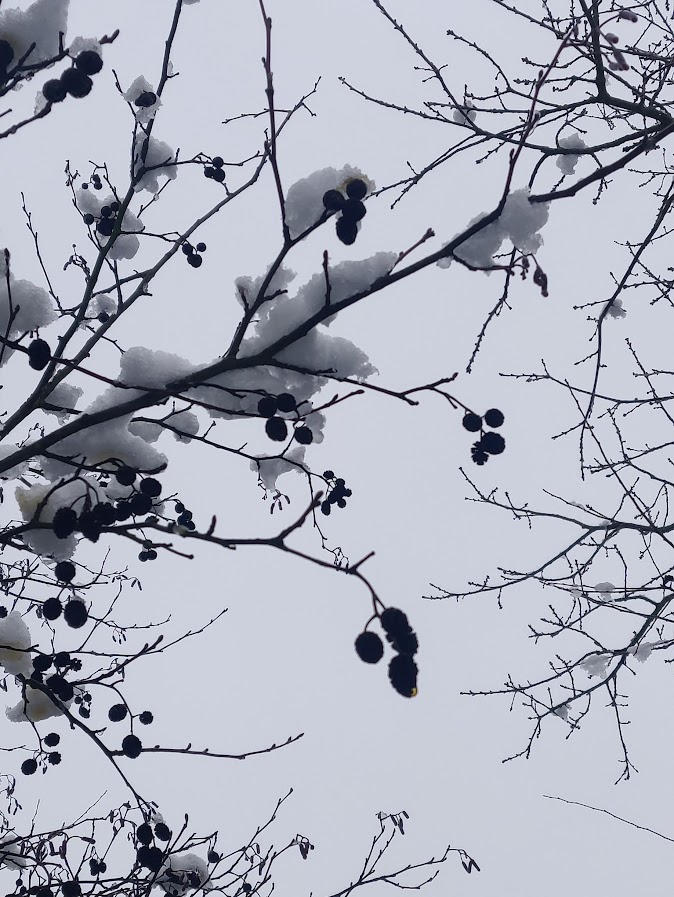
💚 If you’ve read this far, thank you! Have a nice picture of some snowy branches, taken earlier in January. 💚

What I’ve been up to lately: November edition

What have I been up to? Quite a lot of different things! One thing about editing, proofreading and translation is that the work is extremely varied, so I thought I’d share a glimpse into some of the projects I’ve been working on, as well as what I have coming up.

Annual reports, corporate sustainability reports and the like are something of a constant in my business. I translate and edit them regularly, even outside the busy January-to-April period. One thing I’ve found really encouraging about this work is seeing the emphasis shift from the finances (the bottom line) to the triple bottom line of people, planet and prosperity. It’s allowed me to shift the emphasis in my own business, which has meant a lot to me, as a one-person business trying to make a difference in the world.

Photo by Edward Howell on Unsplash

I’ve also been doing some work for Candlelighters, a wonderful Yorkshire charity that supports families dealing with childhood cancer. It was really touching to proofread their impact report, which gave an insight into some of the issues these families face, as well as showing just how hard Candlelighters works to help them.

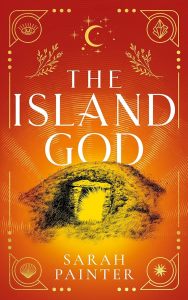
On a completely different (and voluntary) note, I beta-read a novel that came out recently. I’ve been a fan of Sarah Painter’s urban fantasy for years, so it was lovely to come on board at an earlier stage and offer some input. I loved the finished result, too! Check out The Island God here.

Cover of The Island God, a novel by Sarah Painter

What’s next

December is already looking busy: among the projects I have lined up are the translation of an annual report for a major Scandinavian bank, plus a couple of book projects. First up, I’m copyediting a fun SF novel that I would characterise as like Hitchhiker’s Guide, but if Adrian Mole was the main character. I’m also editing a memoir on a subject that’s very close to my heart. I can’t wait to show you both of these when they make it out into the world.

I’m now almost fully booked for December, which is a nice feeling! I have space for a couple of smaller projects, so please do contact me if that sounds like your project – or if you’d like to book me for editing, proofreading or translation work of any length from January onward! I’m looking forward to watching many Better World projects flourish in 2025. 💚

Photo by Better World Words

Lay or Lie?

Lay or lie?

A semi-regular series in which I talk about errors that come up a lot in my proofreading and editing work.

Confusion appears to be growing about the proper use of the verbs “to lie” (to recline) and “to lay” (to place or put down). I see “lay” used incorrectly on the internet all the time, I hear it on podcasts, and among other things it seems to be endemic to the fitness profession in real life. I also see it in published books, which makes me sad, so here’s my attempt to straighten things out.

Essentially, lie is a “doing” verb, while lay is a passive one. A person lies down, but a thing must be laid down BY someone. (In grammatical terms, “to lie” is an intransitive verb while “to lay” is a transitive verb that requires a direct object to complete it.)

Not an actual rule, but a possibly helpful rule of thumb that occurred to me while writing this post: If you can replace the word “lay” with “put” or “place”, “lay” is likely to be correct. If you can’t, think about whether you should actually be using “lie”.

Examples:

INCORRECT: Lay down on your mat.*
CORRECT: Lie down on your mat.

INCORRECT: They lie the yoga mats on the ground.
CORRECT: They lay the yoga mats on the ground.

INCORRECT: The cats were laying on the bed.
CORRECT: The cats were lying on the bed.

CORRECT USE OF “TO LIE”: I lie on my bed, remembering yesterday, when I lay** by the beach in the sunshine. I have lain there many times, listening to the waves.

CORRECT USE OF “TO LAY”: I lay down the teacup carefully. Yesterday I laid it down carelessly and spilt the tea. I have laid down many cups in my life, and have a tendency to be careless with them.

I hope this post clarifies things a little. Honestly, I’m increasingly noticing this error in published books, and I suspect that eventually (in another fifty years or so) “lay” will become acceptable as a straight replacement for “lie”. But at the moment, it isn’t accepted practice, so if you work with me, expect me to correct it!

[Photo by Alex Shaw on Unsplash. Image shows two women sitting cross-legged on yoga mats, with a bamboo curtain in the background.]

*Yoga instructors, I’m looking at you.

**Yes, the past tense of “lie” is “lay”. Because the English language is ridiculous, which is why we need editors and proofreaders.

That September feeling

Do you have that back-to-school feeling? I do. The past few weeks have been a blur of showing family around our new part of the world, catching up with friends in our old part of the world, music festivals, a surprise few days by the sea (most of which were spent working in local libraries – hurray for libraries and their lovely staff!), and a week of looking after three very sweet, very skittish black cats*.

Now I’m back in my office, surrounded by notebooks and pens, and with my laptop set-up back in order. Work has already picked up again, after a quiet couple of summer months, but I still have openings for editing and proofreading, so if you need someone to look at your writing, let’s talk!

*I was briefly tempted to rebrand as Black Cat Editing and Cat-Sitting but, cosy and comforting though that may be, it doesn’t really fit my aim, which is to help people make the world better with their words. Better World Words it is!